![Galerie RÉFLEXION[S]](https://galerie-reflexions.fr/wp-content/uploads/2026/01/Galerie-Reflexions_logo-fond-blanc-scaled.jpg)
Pascal Perrin
Biography
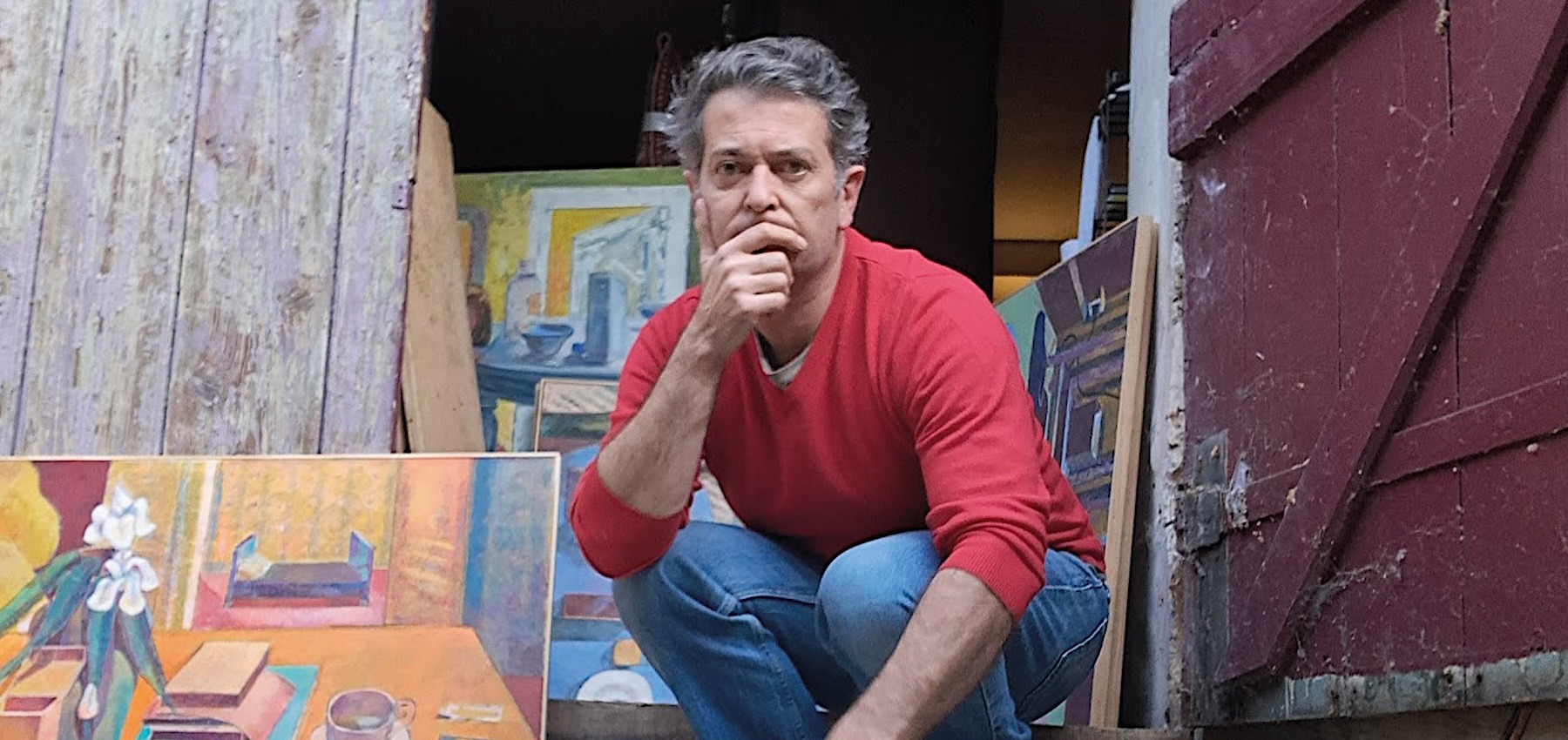
After a baccalaureate in Visual Arts and studies in art history, Pascal Perrin joined the École nationale supérieure des arts appliqués et des métiers d’art-Olivier de Serres and became a mold-maker and statuary at the Airaind’art foundry in Saint-Rémy-lès-Chevreuse. His work notably includes the molding and enlargement of sculptures.
In 1994, he completed a training program in fresco restoration in Haute-Corse and Italy.
In 1997, he joined the Wildenstein Institute to participate in the production of the Vlaminck catalogue raisonné, followed by those of Renoir and Monet.
Artistic Approach
Although Pascal Perrin has never stopped painting since his adolescence, he kept his work private for a long time, only beginning to share it sparingly with the public in the early 1990s. During his youth, his true source of inspiration was found in Italian Renaissance paintings, where he was fascinated by both the construction and the articulation of colored masses. These two concerns have consistently dominated his entire body of work, enriched by a sensitive treatment of light.
The subjects chosen by the artist are drawn from daily life, everyday gestures, and the landscapes he encounters.
The table holds a significant presence in his work. A symbol of meeting, exchange, sharing, and reflection, it hosts—most often in late afternoon light—plates, dishes, cups, fruit, and sheets of paper. These are common objects that offer a perspective on daily life while questioning its depth. “For me, the table is,” he explains, “a great example of civilization. No longer eating on the ground, being able to elevate the place where food is shared. The table is a sign of peace, and of a certain spirituality as well. It is a bit like when the sea is slack. It is something calm, peaceful. It is also a truce in the day.“
In interior scenes, the table sometimes disappears to make way for the expressiveness of an internal questioning, as expressed by a character wearing boxing gloves directed toward a bookshelf. “One can hurt oneself with knowledge, but one must not hurt knowledge,” the artist notes. It is a kind of mirrored inquiry, in which anger is frozen through the presence of a dog whose calmness tempers the initial violence of the human gesture.
In the same way, the landscapes embody the elevation of the gaze toward the world around us to capture the lights and atmospheres toward which we may not look up enough, or focus our gaze sufficiently. For Pascal Perrin, the perception of a landscape stems from “very ancient sensations, preceding language, which are always present regardless of age.”
In this permanent questioning of the everyday, the painter never ceases to express its depth, to seek the solace it can provide, and to leave ample room for luminous sensations and their generative power.
Exhibitions
2024
Open Space Gallery, Sète
2015
Group exhibition: Another Mano a Mano, L’Atelier 5, Arles
1995
Exhibition of paintings, Mail Branly, Paris
1990
Exhibition of a monumental concrete column – SAD Grand Palais, Paris
Works
-
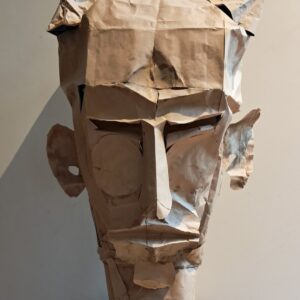
The Carthaginian
1 500,00 € -
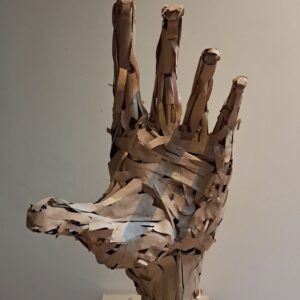
Large Hand
2 200,00 € -
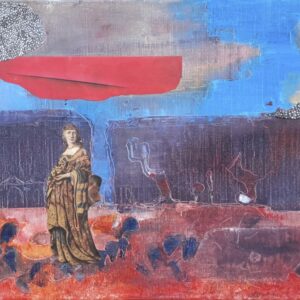
Desert IV
2 000,00 € -
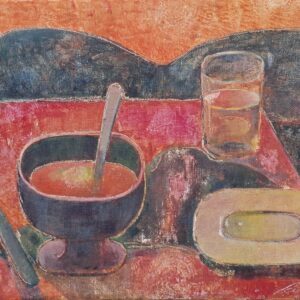
Desert III
1 500,00 € -
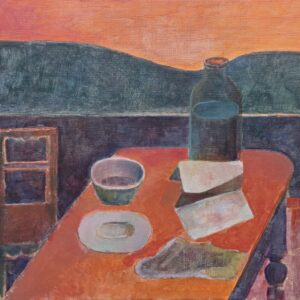
Desert II
2 500,00 € -
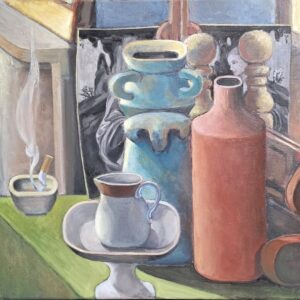
The Blue Vase
2 500,00 € -
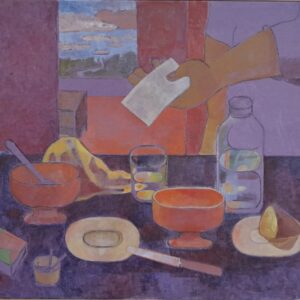
The White Letter
3 000,00 € -
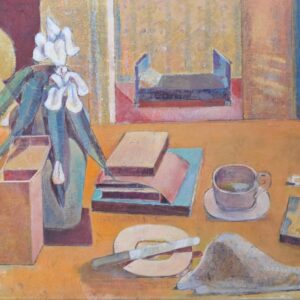
Convalescence
3 000,00 € -
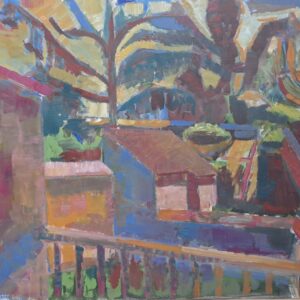
The Garden of Vulaines
5 000,00 € -
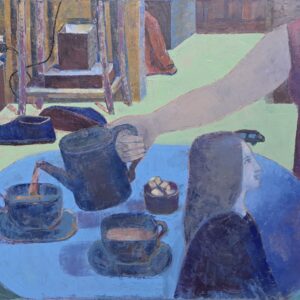
Morning
5 000,00 € -
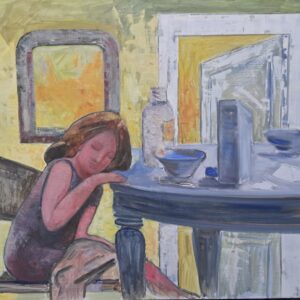
Cornélia
5 000,00 € -
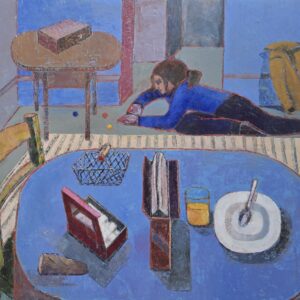
Bellise, marbles game
5 000,00 € -
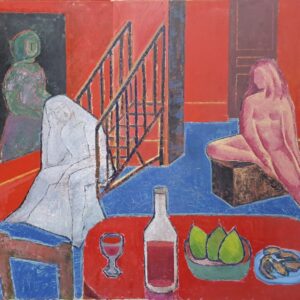
The Sisters
5 000,00 € -
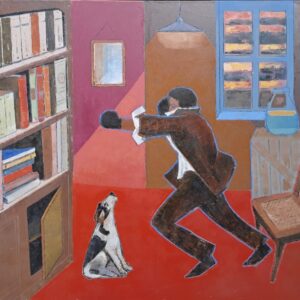
The Animal
5 000,00 €